Thinking about a place where weekday convenience meets leafy neighborhood charm? In Clayton, you can grab coffee near your condo in the morning, hop on MetroLink for a quick ride, then unwind in a shaded park by evening. If you want an urban feel within a compact suburb, this guide will help you picture daily life and the housing choices that come with it. You’ll learn about neighborhoods, walkability, parks, schools, market context, and who tends to feel at home here. Let’s dive in.
Clayton at a glance
Clayton is the county seat of St. Louis County and spans about two and a half square miles, blending a bustling business core with established residential streets. The city describes a compact, mixed-use environment with a strong professional daytime population that supports restaurants and services downtown. You’ll find mid-rise and high-rise buildings near the center and tree-lined blocks beyond it. City of Clayton overview.
According to U.S. Census QuickFacts, the July 1, 2024 population estimate is about 17,512 residents, with high educational attainment and many professionals. This profile aligns with what you see downtown on weekdays: people headed to offices, courts, banks, and corporate hubs, then staying to dine or attend community events after hours. Census QuickFacts: population.
If you want a quick mental snapshot, think upscale suburban downtown at the core, wrapped by neighborhoods with sidewalks, pocket parks, and a traditional street grid. The result is a daily rhythm that feels active without feeling rushed.
Neighborhoods and housing styles
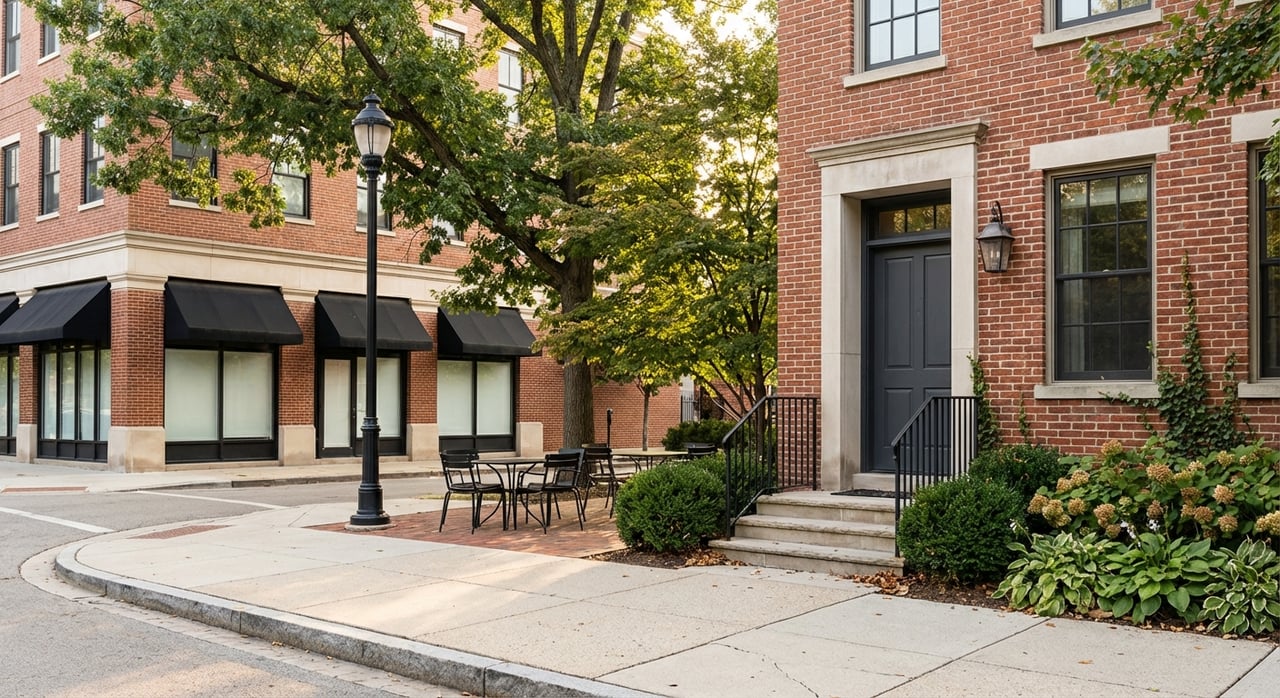
Clayton’s housing stock offers real variety for a small city. Close to downtown, you’ll see high-rise residences and newer condo buildings. Move a few blocks out, and the streets transition to prewar brick apartments, mid-century walkups, and single-family homes in established subdivisions.
Downtown condo and high-rise living
If you want walkable, low-maintenance living, downtown Clayton checks many boxes. Here, restaurants, coffee shops, fitness studios, and everyday services sit within short walks. MetroLink’s Clayton and Forsyth stations add a regional rail connection for work or airport trips. Walkability is strongest in the core, and local market profiles often spotlight that convenience. For a sense of overall pedestrian friendliness, see the citywide Walk Score context, which rates much of Clayton as somewhat walkable, with the core scoring higher. Walk Score overview for Clayton.
Typical downtown buyers prioritize elevator access, secure parking, and on-site amenities. Many also look for lock-and-leave convenience that makes business travel or second-home ownership easier.
Historic streets and single-family options
If you picture leafy blocks and character-rich homes, you’ll find them in neighborhoods like Claverach Park, Davis Place, The Moorlands, and DeMun. These areas feature mature trees, sidewalks, and a mix of architectural styles that reflect Clayton’s long residential history. You’ll also see prewar and mid-century apartment buildings that create more entry options along with larger single-family homes. For a high-level overview of Clayton’s neighborhoods and history, reference the city’s general profile page. Clayton, Missouri overview.
Buyers drawn to these areas often want yard space, a traditional streetscape, and short drives to downtown Clayton or nearby shopping districts. It’s a good fit if you value a quieter residential feel without giving up proximity to services.
Getting around: walkability and transit
Day to day, your experience depends on where you live in the city. Downtown Clayton is very walkable with a concentrated mix of dining and retail. Beyond the core, many blocks remain pedestrian friendly for local errands and park trips, though you’ll likely use a car more often. MetroLink serves downtown at the Clayton and Forsyth stations, and MetroBus routes connect you to central St. Louis. Because Clayton sits near major arterials, driving times to regional destinations are typically short. Walk Score context.
Parking downtown includes a mix of meters and garages. City resources also outline where event parking is available near parks and civic spaces. For one example, see the city’s Shaw Park parking guidance. Shaw Park parking guidance.
Parks, greenways, and recreation
Clayton invests in well-used public spaces. Shaw Park is the city’s flagship park, offering a pool, courts, fields, playgrounds, and seasonal programming that anchors community life. Oak Knoll Park and several pocket parks add neighborhood green space. You can also connect to the Centennial Greenway and regional bike routes for longer rides and runs. These features make it easy to get outside before or after work without leaving the city. Clayton parks and recreation.
On weekends, you’ll see families at playgrounds, pick-up games on fields, and community events spread across the calendar. Many neighborhoods are within a short walk or bike ride of a park, which adds to Clayton’s relaxed, residential rhythm.
Dining, culture, and annual events
For a small geographic area, downtown Clayton packs in a robust dining scene, from casual to elevated. The city and local partners also spotlight a recurring dining calendar, including Restaurant Week promotions that draw diners from across the metro. You can preview event details through local calendars like St. Louis Public Radio’s community listings. Clayton Restaurant Week listing.
Signature cultural events include the St. Louis Art Fair, which transforms downtown streets into an open-air gallery. Seasonal farmers’ markets and pop-up happenings contribute to a walkable weekend culture. The net effect is a downtown that feels alive after business hours and on Sundays, not just during the weekday rush.
Schools and education
The School District of Clayton serves local public schools, including Clayton High School. The district and high school are routinely described as high performing, and the district website provides current information on academics, activities, and enrollment. If school quality is on your checklist, make it a point to review the latest programming and performance data directly from the district. School District of Clayton.
Because school boundaries and offerings can change, always verify your specific address and grade-level options before making a move.
Housing market snapshot: prices and property types
Clayton sits in the upper tier of St. Louis-area home values. U.S. Census QuickFacts shows a 2020–2024 median value for owner-occupied housing units of about 830,000 dollars, which aligns with Zillow’s Home Value Index that placed typical values in the low-to-mid 800,000s as of late 2025. These are high-level anchors that signal pricing well above many nearby suburbs. Expect significant variation by neighborhood and building type. Census QuickFacts: home values.
What does that mean for you?
- Condos and high-rises near downtown typically price by building, view, and amenity level. HOA fees vary, so factor monthly costs into your budget.
- Prewar and mid-century flats provide smaller-footprint options that can be more attainable than single-family homes, with tradeoffs in space and parking.
- Single-family homes in historic neighborhoods command premium prices for lot size, architecture, and proximity to parks and the core.
Rental and entry options exist, including condos and smaller apartments, but monthly costs trend higher than many St. Louis suburbs. Because rental averages move with supply, verify current listings and lease terms before you shortlist buildings.
Public safety snapshot
Buyers and renters commonly review police reports before deciding on a block. The Clayton Police Department’s annual reporting highlights that the city remained one of the safer communities in the region in 2024, with burglaries at their lowest in more than a decade, a notable drop in motor vehicle thefts compared with 2022, and consistently low robbery counts. The department also emphasizes traffic safety and community outreach. For the latest reporting and community programs, review the department’s publications. Clayton Police Department reports.
For a micro-neighborhood read, many buyers scan recent incident summaries and speak with neighbors to understand day-to-day patterns on the exact blocks they are considering.
Who thrives in Clayton
Clayton tends to fit people who want a compact, service-rich community with a strong downtown and established neighborhoods. That includes:
- Professionals and downsizers who value walkable dining and easy transit access to central St. Louis and the airport.
- Households that prioritize strong public schools and are prepared for upper-tier home prices.
- Buyers who appreciate both condo convenience and the option to step into tree-lined streets and parks.
If you like the idea of urban energy inside a polished suburb, Clayton belongs on your short list.
Practical tips before you buy or rent
Compare neighborhoods and buildings
Tour both the downtown core and the surrounding neighborhoods. In the core, compare HOA structures, amenity sets, and parking. In neighborhoods, confirm lot size, renovation levels, and proximity to parks. If school access matters, verify enrollment and boundaries with the district.
Check taxes and parking
Because Clayton’s values sit above many suburbs, property taxes can feel higher. Actual tax bills depend on assessed value and St. Louis County levies, which change over time. Check the County’s current schedules for the best estimate. For downtown parking, review city guidance on garage and metered zones, and note that event days may have special rules. Shaw Park parking guidance.
Validate safety on your block
Use the police department’s recent summaries to get a current picture, then pair that with on-the-ground observations at different times of day. This balanced view helps you understand patterns beyond citywide averages. Clayton Police Department reports.
Is Clayton the right fit?
Clayton offers a rare blend: a serious business center wrapped in friendly, walkable neighborhoods and well-kept parks. You get dining variety, seasonal events, and quick regional access, plus a school district known for strong academics. Prices reflect those advantages, so the key is matching lifestyle priorities with the right building or block.
If you’re weighing Clayton against other St. Louis options, a calm, step-by-step plan makes all the difference. From previewing buildings and neighborhoods to aligning budget, taxes, and timing, steady guidance helps you move with confidence.
Ready to explore Clayton with a neighborhood-first approach? Reach out to Meggin Martin to compare areas, preview homes, or map a polished sale plan with Compass-backed tools.
FAQs
Is Clayton, Missouri walkable and transit-friendly?
- Downtown is very walkable with restaurants and services close together, and MetroLink stations at Clayton and Forsyth; outside the core, most areas are somewhat walkable and many residents use a car for longer trips. Walk Score context
How expensive is housing in Clayton compared to nearby suburbs?
- U.S. Census QuickFacts shows a 2020–2024 median owner-occupied value near 830,000 dollars, and Zillow’s index placed typical values in the low-to-mid 800,000s as of late 2025, which is above much of the region. Census QuickFacts: values
What types of homes and neighborhoods are common in Clayton, MO?
- Expect high-rise condos near downtown and established neighborhoods like Claverach Park, Davis Place, The Moorlands, and DeMun that feature single-family homes and prewar to mid-century apartment buildings. City overview
How are the public schools in Clayton, Missouri?
- The School District of Clayton is routinely described as high performing; review the district’s website for up-to-date academics, programs, and enrollment information. School District of Clayton
What parks and recreation options define daily life in Clayton?
- Shaw Park anchors city recreation with a pool, courts, fields, and events; Oak Knoll Park and pocket parks add green space, and the Centennial Greenway links into a broader regional trail network. Clayton parks