Thinking about trading a tight city lot for more space without giving up convenience? Estate-style living in Town and Country offers privacy, mature trees, and room to spread out while staying close to West County amenities. In this guide, you will learn what “estate” means in the city code, what daily life looks like on a one-acre-plus property, and how Town and Country compares to nearby luxury suburbs. You will also get a clear checklist to help you move forward with confidence. Let’s dive in.
What “estate” means in Town and Country
In Town and Country, estate living is more than a feel. It is defined by zoning. The city’s Estate and Suburban Estate districts set minimum lot sizes, widths, setbacks, and green-space rules that create the park-like character buyers expect. You can review the specifics in the city’s code for Estate and Suburban Estate Residential Regulations.
- Estate (E) district: minimum lot area of 80,000 sq ft and minimum width of 175 ft. The district also sets larger setbacks and strong green-space requirements to preserve a rural, low-density feel. See the city code for details.
- Suburban Estate (SE) district: minimum lot area of 43,560 sq ft (1.0 acre) and minimum width of 150 ft with defined setbacks, floor-area-per-lot limits, and green-space minimums. Read the SE standards in the code.
Corner and double-frontage lots
Corner and double-frontage parcels carry higher minimum sizes, which affects privacy and layout. For example, some E corner lots must be at least 100,000 sq ft and SE corner lots at least 54,000 sq ft. These rules shape how homes sit on the land and what screening is possible. You can confirm minimums in the code.
Accessory features, pools, and gates
Accessory buildings, pools, and structures are carefully regulated. Above-ground pools are listed among prohibited uses in the E and SE rules. In practice, that is why you often see in-ground pools, guest houses, and detached garages that meet setback and design standards. Private driveway gates require conditional-use approval and must meet design and safety requirements that vary by location. Review the accessory and gate rules here.
What you will find on the market
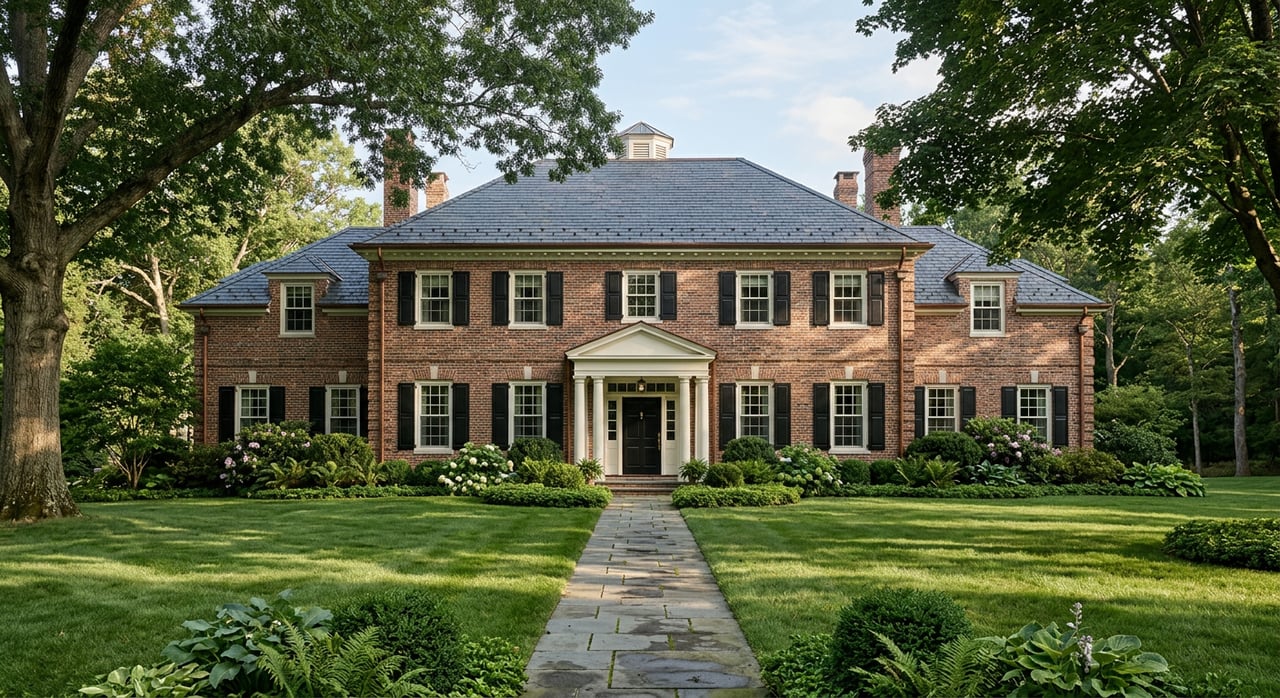
Most active listings and recent sales show homes on about 1.0 to 1.5 acres, with some larger parcels in older estate pockets. You will see a mix of mid-century ranches and traditional 1970s–1990s homes alongside custom new builds and high-end remodels. The area’s housing stock skews post-1970, so finishes and systems vary widely by era and renovation history. Census data supports the area’s later 20th-century growth.
Common on-lot features include long private drives, mature tree buffers, in-ground pools, outdoor entertaining areas, carriage houses or guest suites, and curated lighting and landscaping. These amenities must still comply with setbacks, floor-area-per-lot limits, and green-space rules.
Everyday costs and practicalities
Estate properties deliver privacy and breathing room, but they come with different operating needs than a smaller suburban lot.
- Grounds and trees: Larger lawns, irrigation, seasonal cleanups, and tree care often require professional service on a set schedule.
- Pools and hardscapes: In-ground pool service, exterior lighting, patios, and any outbuildings add maintenance and insurance considerations.
- Snow and driveways: Long private drives often mean hiring snow removal each winter.
- Utilities and stormwater: The city’s land-development standards reference MSD and local water-company requirements. Newer subdivisions may require owners to maintain on-site stormwater systems and private drives. Always review recorded easements and maintenance obligations. See the city’s land-development standards.
- Permits and ARB: Large additions, accessory buildings, and gates often go through site-plan and architectural review, which affects project timelines. View Planning and Zoning materials.
- Taxes: Property tax bills combine multiple taxing districts. The City adopted a $0.23 per $100 assessed municipal levy in its latest budget cycle. Individual bills vary by assessed value and districts, so confirm the current levies for any parcel. Review the city’s budget document.
By the numbers: market and lifestyle context
Town and Country is a small, high-income city of about 11,600 residents, with a high homeownership rate and well-educated households. Median household income is roughly $232,500, and the median owner-occupied housing value is about $928,500 based on ACS 5-year estimates. These figures place the city among the region’s higher-value markets. See the full census profile.
How Town and Country compares nearby
Public market portals show Town and Country aligned with the region’s luxury suburbs in price and lot size, with a distinct large-lot profile.
- Ladue: Historic estates and many large parcels. Recent portal snapshots often show average values around $1.2–1.3M.
- Frontenac: Compact, high-value homes on sizable lots, commonly in the million-dollar range.
- Clayton: Higher-density, walkable, and urban services. Average values in the high six figures on many snapshots, with fewer large-acreage options.
- Chesterfield and Wildwood: Generally lower average prices than Town and Country on portals. Wildwood offers more exurban acreage, while Chesterfield delivers suburban convenience at lower average price points.
Takeaway: Town and Country sits between inner-ring legacy estates and farther-west acreage communities. You get one-acre-plus lots and a quiet setting with convenient access to West County shopping, schools, and clubs.
Amenities and lifestyle anchors
- Country-club culture: Nearby private and semi-private clubs offer golf, racquet sports, and social events that many residents enjoy.
- Schools and campuses: The Principia School operates a large Town and Country campus that serves many local families. Parkway public schools serve much of the city, and several private schools are a short drive. Explore Principia’s campus news.
- Shopping and dining: Town & Country Crossing and nearby retail along Clayton Road and Woods Mill Road put groceries, restaurants, and services within minutes.
- Parks and trails: Queeny Park offers trails, a dog area, and year-round programs close to many neighborhoods. Get a sense of the park’s offerings.
Due diligence checklist for buyers
Use this list to confirm what matters most before you write an offer.
- Verify the zoning district (E vs SE) and the exact lot area, width, setbacks, and green-space requirements. Check the code here.
- Confirm public sewer and water connections, and identify any private stormwater or driveway maintenance obligations. Review land-development standards.
- Ask for recorded easements, subdivision documents, and any HOA or road-maintenance agreements.
- Confirm what accessory uses are permitted and whether conditional-use approval is required for gates or large outbuildings. See accessory and gate rules.
- Pull recent tax and assessment history from the county and factor in the city’s current municipal levy. See the budget reference.
- Get bids for landscaping, tree care, pool service, snow removal, and exterior maintenance to build a realistic annual budget.
- If you plan to renovate or build, discuss ARB and Planning timelines early. Review P&Z materials.
Is estate living right for you?
If you value privacy, mature trees, and room to entertain, Town and Country’s estate districts deliver a rare blend of space and convenience. The legal framework supports long-term neighborhood character, and the market offers a mix of renovated classics and custom new builds on one-acre-plus parcels.
When you are ready to explore options, you deserve calm, clear guidance and a smart plan. From confirming zoning and easements to building a realistic maintenance budget and negotiating the right price, you can count on seasoned local advice. If you are selling, premium preparation and Concierge-style improvements can help your home shine. To start a focused conversation tailored to your goals, reach out to Meggin Martin.
FAQs
What does estate zoning mean in Town and Country?
- The city’s Estate (E) and Suburban Estate (SE) districts set minimum lot sizes of 80,000 sq ft and 43,560 sq ft respectively, along with width, setback, and green-space requirements that shape privacy and buildable area.
Are private driveway gates allowed on estate lots?
- Yes, but gates require a conditional-use permit and must meet location, design, and safety standards listed in the city code, which limits eligibility to certain access conditions.
How do property taxes work for estate homes here?
- Taxes combine multiple districts; Town and Country now levies a municipal property tax of $0.23 per $100 assessed value, so confirm the full, current rates for any property before you buy.
How does Town and Country compare to Ladue or Frontenac?
- Portal snapshots place Ladue and Frontenac in the million-dollar range on average, with large parcels; Town and Country offers many one-acre-plus lots at comparable high-end levels, though individual prices vary.
What ongoing maintenance should I budget for on a one-acre lot?
- Plan for professional lawn and tree care, irrigation, pool service if applicable, seasonal cleanup, snow removal for longer drives, and exterior maintenance of lighting, patios, and any outbuildings.
What permits are needed for a pool, guest house, or addition?
- Most significant projects require permits and may go through architectural review and Planning and Zoning, so expect a defined process and timeline before construction begins.